

Renewable raw materials
The raw materials come from natural plants such as bamboo and sugarcane, which have a short growth cycle and are a rich renewable resource.

Product can be recycled
After use, the product can be recycled and used as a raw material to make new products

Degradation without micro waste
Paper bottles can be degraded in the natural environment, and the resulting substances are retained in the soil as nutrients required for plant growth.
Renewable raw materials
The main raw materials for plant fiber containers include bamboo, sugarcane stalks, and trees, all of which are born in nature and ultimately undergo natural degradation to return to nature. It is a renewable resource that can be obtained from responsibly managed forests, contributing to the sustainable development cycle. Its growth process absorbs carbon dioxide and releases oxygen, making it more environmentally friendly throughout its entire life cycle and having a lower carbon footprint.


Bamboo is a fast-growing plant that does not require fertilizer and regenerates from its own roots, so it does not need to be replanted. Using bamboo as pulp is beneficial as it reduces reliance on traditional wood and helps protect forests.
Sugarcane bagasse is an excellent material for forming packaging. This is one of the most sustainable choices as it reuses the waste from the sugarcane industry and is biodegradable and compostable.

Product can be recycled
After use, the product can be recycled and used as a raw material to make new products
Paper containers can be recycled for recycling, and products that are not recycled have a biodegradation rate of over 90% within 6 months in the natural environment, with no micro waste during degradation.

Degradation without micro waste
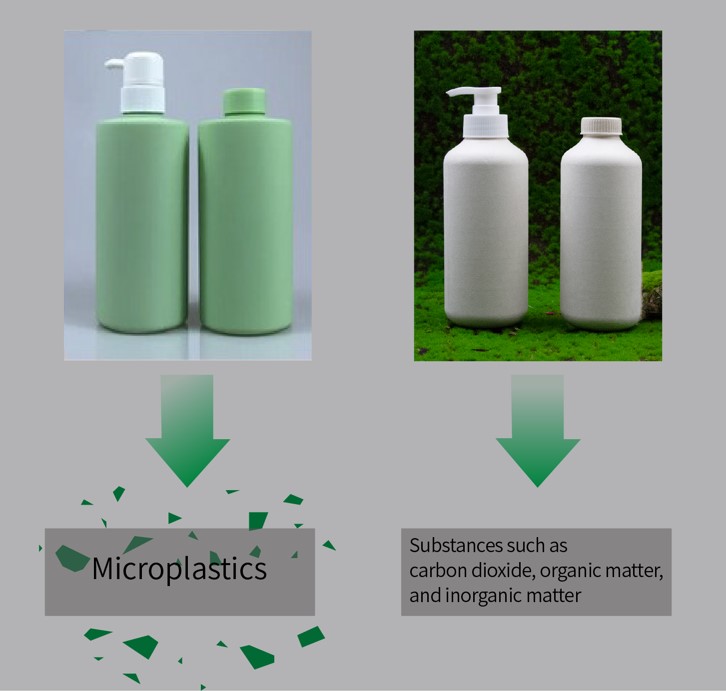
Plastic degradation refers to the transformation of polymers from large molecules to small chain segments after being exposed to light, which cannot be degraded into environmentally friendly carbon dioxide and water. The small fragments produced by degradation still remain in the soil and cannot be recycled, which further affects the growth of plant roots and may even enter the human body through the food chain, endangering human health. This is what we often refer to as micro waste residue. The biodegradation of paper bottles is the process of transforming biomass substances in plant fibers, such as carbon, into organic and inorganic substances after treatment. This not only provides healthy fertility for the soil, stores more carbon, but also retains more inorganic and water, prevents nutrient loss in the soil, and increases the survival of plants, forming a virtuous cycle. So the biodegradation of paper bottle products should be the ultimate destination of degradation.
